

How to calm an anxious dog is one of the most important concerns for pet owners dealing with dogs that show signs of stress, fear, or nervous behavior. Anxiety in dogs is more common than many people think, and it can affect dogs of all ages, breeds, and sizes. Whether your dog gets anxious during loud noises, when left alone, or in unfamiliar situations, understanding how to manage their stress is essential for their well-being.
Dogs experience anxiety in different ways. Some may bark excessively, while others may shake, hide, pace, or become destructive. These behaviors are not signs of a “bad dog,” but rather an indication that your dog is feeling overwhelmed and unsure of how to cope.
Anxiety in dogs is a common issue that can affect behavior and overall health. According to the American Kennel Club, anxiety can be triggered by separation, loud noises, or changes in routine, and managing it often requires a combination of training, routine, and environmental adjustments.
The good news is that there are effective ways to help your dog feel calmer and more secure at home. By combining proper routines, environmental adjustments, and supportive tools, you can significantly reduce your dog’s anxiety and improve their quality of life.
In this guide, we will explore practical and proven strategies that show exactly how to calm an anxious dog and create a more peaceful environment for both you and your pet.
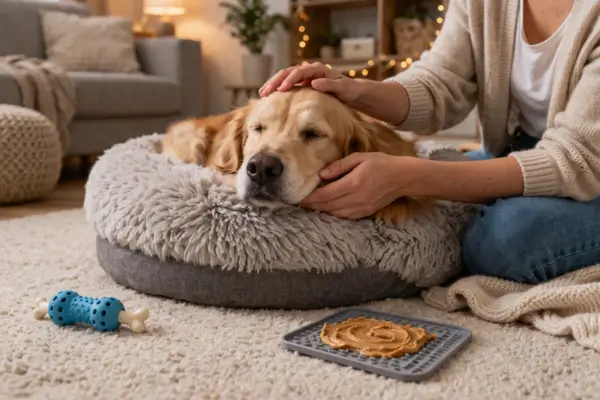
What Causes Anxiety in Dogs
Before learning how to calm an anxious dog, it is important to understand what may be causing the anxiety in the first place.
Some of the most common triggers include:
- separation from owners
- loud noises (thunder, fireworks)
- changes in routine
- new environments
- lack of socialization
- past trauma or negative experiences
Each dog reacts differently, so identifying your dog’s specific triggers is key to finding the right solution.
Signs Your Dog May Be Anxious
Dogs often show clear physical and behavioral signs when they are anxious.
Common signs include:
- excessive barking or whining
- pacing or restlessness
- shaking or trembling
- destructive behavior
- hiding or avoiding interaction
- excessive licking or panting
Recognizing these signs early helps you take action before the anxiety worsens.
If your dog also shows behavioral patterns like constantly staying close to you, you may want to read our guide on Why Does My Dog Follow Me Everywhere? to better understand attachment-related behaviors.
How to Calm an Anxious Dog at Home
Understanding how to calm an anxious dog involves creating a safe, predictable, and comforting environment.
1. Create a Safe and Comfortable Space
Dogs need a place where they feel secure.
This could be:
- a cozy dog bed
- a quiet corner of the house
- a crate with soft bedding
- a low-traffic area
Having a designated safe space helps your dog relax during stressful moments.
2. Maintain a Consistent Routine
Dogs feel more secure when they know what to expect.
Try to keep consistent:
- feeding times
- walks
- playtime
- bedtime
Routine reduces uncertainty, which is a major cause of anxiety.
3. Provide Mental and Physical Stimulation
A tired dog is a calmer dog.
Mental stimulation plays a key role in reducing anxiety, and you can explore effective enrichment options in our guide on Best Interactive Dog Toys for Bored Dogs.
Daily activities help reduce anxiety by releasing built-up energy.
This can include:
- walks
- play sessions
- training exercises
- puzzle toys
Mental stimulation is especially important for anxious dogs.
4. Use Calming Techniques
There are several simple techniques that can help calm your dog:
- gentle petting
- soft voice communication
- calming music or white noise
- slow breathing around your dog
Your calm energy can directly influence your dog’s behavior.
5. Avoid Reinforcing Anxiety
It’s natural to want to comfort your dog when they are anxious, but excessive attention during anxious behavior can reinforce it.
Instead:
- reward calm behavior
- ignore attention-seeking anxiety when appropriate
- reinforce relaxation
This teaches your dog that calm behavior is what gets rewarded.
Helpful Products to Calm an Anxious Dog
Using the right tools can make a big difference when learning how to calm an anxious dog.
Calming products can help reduce stress, provide comfort, and support training efforts.
Common helpful products include:
- calming beds
- anxiety wraps
- lick mats
- interactive toys
- calming supplements
These tools work best when combined with proper training and routine.
When to Seek Professional Help
If your dog’s anxiety is severe or does not improve with basic strategies, it may be time to seek professional help.
Consider consulting:
- a veterinarian
- a certified dog trainer
- an animal behaviorist
Severe anxiety may require a more structured training plan or medical support.
Long-Term Strategies for a Calmer Dog
Helping an anxious dog is not a one-time fix—it requires consistency.
For long-term success:
- build positive experiences
- maintain routine
- provide daily stimulation
- avoid sudden changes
- be patient
Dogs improve over time when they feel safe and understood.
Best Products to Help How to Calm an Anxious Dog
If you’re learning how to calm an anxious dog, the right products can make a significant difference. These tools help reduce stress, provide comfort, and support a calmer routine at home.
1. Bedsure Calming Dog Bed
Calming dog beds are designed with soft materials and raised edges that create a sense of security. They help dogs feel safe and supported, especially during stressful situations.
Benefits
- Promotes relaxation and better sleep
- Helps reduce anxiety and stress
- Provides joint and body support
- Creates a safe resting space
Pros
- Soft and comfortable materials
- Ideal for anxious and senior dogs
- Encourages self-soothing behavior
- Available in multiple sizes
Cons
- Not suitable for aggressive chewers
- May lose shape over time
2. ThunderShirt for Dogs-Dog Anxiety Relief Calming Vest
The ThunderShirt works by applying gentle, constant pressure around your dog’s body, similar to a calming hug. This can help reduce anxiety during stressful situations.
Benefits
- Reduces anxiety from noise and separation
- Provides calming pressure
- Helps with travel and vet visits
- Drug-free solution
Pros
- Easy to use and adjustable
- Effective for many dogs
- Lightweight and breathable
- Reusable long-term
Cons
- May not work for all dogs
- Requires correct sizing
3. LUKITO Lick Mat for Dogs & Cats 2 Pack with Suction Cups, Dog Lick Mat for Anxiety Relief
Lick mats are a simple but powerful calming tool. Spreading soft treats on the mat encourages repetitive licking, which naturally reduces stress and anxiety.
Benefits
- Promotes calming behavior
- Releases soothing endorphins
- Provides mental stimulation
- Slows down eating
Pros
- Easy to use and clean
- Affordable option
- Great for daily routine
- Works with healthy treats
Cons
- Requires preparation
- Some dogs may chew the mat
4. Outward Hound by Nina Ottosson Dog Tornado – Interactive Treat Puzzle
Puzzle toys help distract anxious dogs by engaging their mind. They provide a healthy outlet for nervous energy and encourage problem-solving.
Benefits
- Reduces boredom and anxiety
- Encourages mental stimulation
- Keeps dogs occupied
- Helps build confidence
Pros
- Multiple difficulty levels
- Great indoor activity
- Improves focus
- Suitable for all ages
Cons
- Not ideal for heavy chewers
- Dogs may solve easy puzzles quickly
5. Zesty Paws Calming Bites
Calming supplements often include natural ingredients like chamomile, melatonin, or L-theanine to help reduce stress.
Benefits
- Supports relaxation naturally
- Helps reduce anxiety symptoms
- Useful during stressful events
- Easy to administer
Pros
- Available in treats or liquid form
- Non-prescription option
- Can be used daily or as needed
- Works well with training
Cons
- Results may vary by dog
- Some dogs may not like the taste
Conclusion
Learning how to calm an anxious dog is essential for creating a healthy and balanced life for your pet. Anxiety can affect your dog’s behavior, health, and overall happiness, but with the right approach, it is possible to manage and reduce it effectively.
By identifying triggers, maintaining a consistent routine, providing mental stimulation, and using calming tools, you can help your dog feel more secure and relaxed at home. Small daily actions can make a big difference in how your dog responds to stress.
Remember that patience and consistency are key. Every dog is different, and progress may take time, but with the right strategies, you can successfully improve your dog’s emotional well-being.
If you are looking to support your dog and create a calmer environment, start by applying these proven methods on how to calm an anxious dog.