
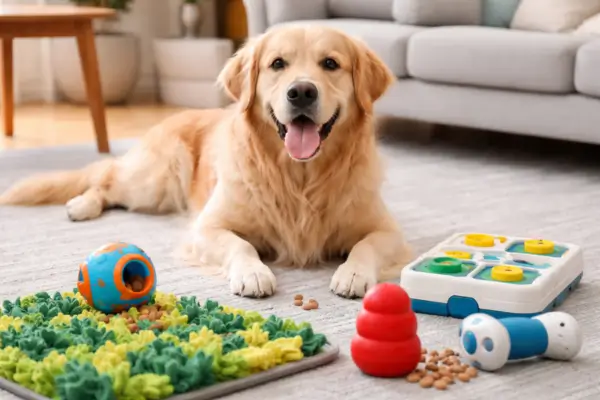
Best interactive dog toys for bored dogs can make a huge difference in your dog’s daily routine, especially if your pet spends a lot of time indoors or alone during the day. Many dogs do not misbehave because they are “bad.” In most cases, they are simply bored, under-stimulated, and looking for something to do. When dogs do not have enough mental and physical enrichment, they often create their own entertainment by barking, chewing furniture, digging, scratching doors, or stealing items around the house.
Interactive toys are highly recommended by veterinarians and trainers because mental stimulation is essential for a dog’s well-being, as explained by the American Kennel Club in their guide about dog enrichment.
That is why interactive toys are so useful. They do more than just keep a dog busy for a few minutes. The right toy can challenge your dog’s brain, encourage problem-solving, reduce stress, and create a healthier outlet for natural behaviors like chewing, sniffing, and hunting for rewards. For pet parents, these toys can also make daily life easier by keeping dogs occupied in a productive way.
Not every dog needs the same kind of stimulation. Some dogs love puzzle toys that hide treats, while others prefer moving toys, squeaky toys, or durable chew-based enrichment tools. Choosing the best option depends on your dog’s personality, age, size, and energy level. A playful puppy may enjoy a toy that rolls and bounces, while an older dog may prefer a slower enrichment activity like a lick mat or treat puzzle.
In this guide, we will look at why boredom happens, how interactive toys help, what features to look for, and how to choose the right toy for your pet. If you want to keep your dog happy, mentally active, and less destructive at home, interactive toys are one of the easiest and most effective tools you can add to your routine.
Why Dogs Get Bored So Easily
Dogs are intelligent animals that need regular mental engagement. While daily walks and basic playtime help, many dogs still need more stimulation throughout the day. This is especially true for dogs that stay home alone for several hours, live in apartments, or do not get enough opportunities to explore new environments.
If your dog is also showing destructive behaviors like chewing furniture or destroying household items, you may want to read our guide on Best Dog Toys for Aggressive Chewers (Top Picks That Last).
Boredom often develops when a dog’s routine becomes too repetitive. If every day looks the same, with little variety, little challenge, and no opportunity to solve problems, many dogs begin to feel frustrated. That frustration can show up in unwanted behaviors like excessive barking, licking, chewing, pacing, or attention-seeking behavior.
Some breeds are even more likely to get bored quickly. Working breeds, sporting breeds, herding dogs, and high-energy dogs usually need a higher level of stimulation than lower-energy breeds. However, even smaller companion dogs can become bored if they do not have enough activities to engage their minds.
Interactive toys help fill that gap. They give dogs something purposeful to do and help turn extra energy into healthy mental work.
Best Interactive Dog Toys for Bored Dogs and Why They Work
The best interactive dog toys for bored dogs work because they encourage active participation instead of passive play. Unlike a basic plush toy that may only hold a dog’s attention for a short time, interactive toys ask the dog to think, move, sniff, chew, or solve a problem in order to get a reward.
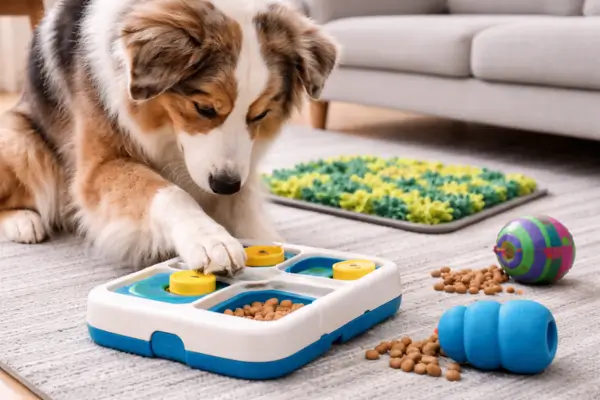
For example, puzzle toys often require dogs to slide pieces, lift compartments, or move obstacles to reach hidden treats. Treat-dispensing toys reward persistence and curiosity. Snuffle mats encourage dogs to use their nose, which is naturally calming and mentally stimulating. Lick mats provide a soothing activity that can help reduce stress and slow dogs down during quiet time.
This type of enrichment is important because mental exercise can be just as tiring as physical exercise. A dog that spends 20 minutes working through a food puzzle may feel more satisfied than a dog that mindlessly chases the same ball for a few minutes. Interactive toys can also help dogs develop confidence, especially when they learn how to solve a toy on their own.
Many dog owners also use these toys to reduce separation stress. Giving a dog an engaging toy before leaving the house can help redirect nervous energy and create a more positive experience around alone time.
Main Benefits of Interactive Dog Toys
Interactive dog toys offer several benefits beyond simple entertainment. One of the biggest advantages is mental stimulation. Dogs need opportunities to use their brain, and interactive toys provide a structured way to do that.
Another major benefit is behavior improvement. A dog with an outlet for boredom is less likely to create destructive habits at home. Toys that involve chewing, licking, sniffing, or solving problems can help reduce behaviors such as barking at every noise, chewing shoes, or scratching furniture.
Interactive toys can also help with slow feeding. Some dogs eat too fast, which can cause digestive discomfort. Treat-dispensing toys, slow feeders, and puzzle bowls can make mealtime more interesting while helping dogs eat at a healthier pace.
They are also useful for rainy days, busy workdays, and apartment living. When outdoor activity is limited, enrichment toys can help fill the gap and give dogs a more balanced daily routine.
For anxious dogs, interactive toys may create a calming effect. Lick mats, stuffed rubber toys, and sniff-based toys often help dogs settle down and focus on an activity that feels rewarding and safe.
Supporting your dog’s mental health with enrichment toys is even more effective when combined with proper nutrition and supplements, as we explain in our guide on Best Dog Vitamins and Supplements: Support Immunity, Joints, and Overall Health.
How to Choose the Right Interactive Toy
Choosing the right toy starts with understanding your dog’s needs. Size matters because toys should be large enough to be safe but small enough for your dog to use comfortably. A toy designed for a tiny dog may not hold up well for a large breed, and an oversized toy may frustrate a small dog.
Durability is another important factor. If your dog is a strong chewer, softer toys may be destroyed quickly. In that case, durable rubber toys or strong treat-dispensing toys are usually a better choice.
You should also consider your dog’s play style. Some dogs love food-based toys, while others are more motivated by movement or sound. A dog that loves sniffing may do well with a snuffle mat, while a highly energetic dog may prefer an automatic moving toy.
Difficulty level matters too. If the toy is too easy, your dog may lose interest fast. If it is too difficult, your dog may become frustrated. It is usually best to start simple and gradually introduce more challenging toys over time.
Best Times to Use Interactive Toys
Interactive toys can be used in several parts of your dog’s routine. One of the best times is before you leave the house. Giving your dog a stuffed toy or puzzle feeder right before departure can shift attention away from your exit and create a positive association.
They are also useful during quiet indoor hours, especially when your dog has energy but cannot go outside. This can happen during bad weather, busy work hours, or evening downtime.
Many pet owners also use interactive toys during crate training or relaxation time. A dog that learns to settle with a lick mat or stuffed chew toy may become calmer and more comfortable resting alone.
Interactive toys can even be used to replace part of a meal. Instead of putting all food in a bowl, you can place some of it in a puzzle feeder to make your dog work for it in a healthy way.
Common Mistakes to Avoid
One common mistake is giving the same toy every day without rotation. Dogs can get used to toys quickly, so rotating them helps keep interest high. Another mistake is choosing a toy that does not match your dog’s size or chewing strength.
Some owners also expect dogs to understand puzzle toys immediately. Many dogs need a little guidance at first. Showing your dog how the toy works and starting with easy challenges can make the experience much more rewarding.
It is also important to supervise new toys in the beginning. That way, you can make sure the toy is being used safely and check whether it is durable enough for your dog’s play style.
Best Interactive Dog Toys for Bored Dogs
Here are some of the best interactive dog toys for bored dogs that help stimulate your dog’s brain, reduce destructive behavior, and keep them mentally engaged throughout the day.
1. KONG Classic Dog Toy
The KONG Classic is one of the most trusted enrichment toys recommended by veterinarians and dog trainers. Its durable rubber design allows you to fill it with treats, peanut butter, or wet food, turning it into a long-lasting mental challenge.
Benefits
- Provides mental stimulation through food rewards
- Encourages natural chewing behavior
- Helps reduce boredom and separation anxiety
- Can be frozen to extend playtime
Pros
- Extremely durable rubber
- Suitable for aggressive chewers
- Dishwasher safe
- Multiple sizes available
Cons
- Some dogs may lose interest if not filled with treats
- Requires preparation to stuff the toy
2. Outward Hound Nina Ottosson Puzzle Toy
This puzzle toy is designed to challenge your dog’s brain by requiring them to move pieces and uncover hidden treats. It is a great way to introduce problem-solving activities into your dog’s routine.
Benefits
- Encourages cognitive development
- Improves problem-solving skills
- Provides mental stimulation indoors
- Helps prevent boredom-related behavior
Pros
- Multiple difficulty levels available
- Non-slip base keeps toy stable
- Great for training and enrichment
- Lightweight and easy to use
Cons
- Not ideal for heavy chewers
- Dogs may solve easier puzzles quickly
3. Starmark Treat Dispensing Bob-A-Lot
The Bob-A-Lot toy turns snack time into an interactive activity. Dogs must push and nudge the toy to release treats from adjustable openings.
Benefits
- Combines mental stimulation with physical activity
- Helps slow down fast eaters
- Keeps dogs engaged for longer periods
- Adjustable difficulty levels
Pros
- Durable plastic construction
- Large capacity for treats or kibble
- Adjustable treat release openings
- Great for high-energy dogs
Cons
- May be noisy on hard floors
- Some dogs may push it under furniture
4. AWOOF Snuffle Mat for Dogs
A snuffle mat allows dogs to use their natural sniffing instincts to search for hidden treats within the fabric layers. This activity mimics natural foraging behavior and can be very calming for dogs.
Benefits
- Encourages natural sniffing behavior
- Provides calming mental stimulation
- Slows down fast eaters
- Helps reduce anxiety and boredom
Pros
- Soft and safe materials
- Machine washable
- Great for indoor enrichment
- Easy to hide treats inside
Cons
- Not suitable for dogs that like to chew fabric
- Needs supervision with destructive dogs
5. Wickedbone Smart Interactive Dog Toy
The Wickedbone is a high-tech interactive toy designed to move automatically, encouraging dogs to chase and play. It reacts to your dog’s touch and movement, creating an engaging play experience.
Benefits
- Encourages active play and exercise
- Provides unpredictable movement to keep dogs engaged
- Helps reduce boredom when owners are busy
- Stimulates both physical and mental activity
Pros
- Rechargeable battery
- Durable outer shell
- App-controlled play modes available
- Great for energetic dogs
Cons
- More expensive than basic toys
- Requires charging
Conclusion
Boredom in dogs is more common than many owners realize, and it often leads to frustrating behaviors at home. The good news is that simple enrichment tools can make a big difference. Interactive toys help dogs stay mentally active, reduce stress, and channel their energy into healthy activities instead of destructive habits.
Whether your dog enjoys sniffing, chewing, licking, chasing, or solving puzzles, there is an enrichment option that can fit into your routine. The key is choosing toys that match your dog’s personality, size, and energy level, then using them consistently as part of daily life.
When used correctly, interactive toys do much more than keep a dog busy. They improve routine, support emotional balance, and help create a happier home for both pets and owners. If your dog seems restless, needy, or destructive, adding enrichment may be one of the easiest improvements you can make. A smart place to start is with the best interactive dog toys for bored dogs.