

Why do dogs tilt their heads is a question many pet owners ask after noticing this adorable and curious behavior. Whether you are talking to your dog, making a strange noise, or holding a toy, your dog may suddenly tilt their head to one side and look at you with focused attention. While this behavior often seems cute and funny, there are actually several interesting reasons behind it.
Dogs use body language and subtle movements to communicate and understand the world around them. A head tilt is not random—it usually means your dog is trying to process something they hear or see. In many cases, it shows curiosity, attention, and engagement.
Dogs often tilt their heads as a way to better understand sounds and human communication. According to the American Kennel Club, this behavior is commonly linked to a dog’s ability to process auditory cues and respond to familiar words and tones.
Although this behavior is completely normal, understanding why it happens can help you better connect with your dog and recognize what they are trying to communicate. In this article, we will explore the most common reasons behind head tilting and when it may indicate something more serious.
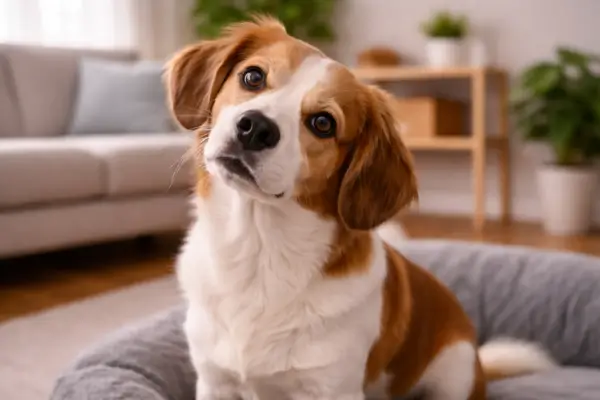
Why Do Dogs Tilt Their Heads? Common Reasons
There are several explanations for why do dogs tilt their heads, and most of them are related to how dogs interpret sounds, emotions, and visual cues.
1. Trying to Hear Better
One of the main reasons dogs tilt their heads is to better understand sounds.
Dogs have highly sensitive hearing, but sometimes they need to adjust their head position to locate where a sound is coming from. Tilting their head helps them:
- pinpoint direction of a sound
- focus on specific frequencies
- better interpret unfamiliar noises
For example, when you say a new word or make an unusual sound, your dog may tilt their head to process it more clearly.
2. Understanding Human Speech
Dogs are very good at recognizing tone, patterns, and certain words in human speech.
When you talk to your dog, especially in a higher-pitched or excited voice, they may tilt their head as they try to understand what you are saying. They are listening for familiar words like:
- “walk”
- “treat”
- “outside”
- their name
This behavior often shows that your dog is paying close attention and trying to interpret meaning.
3. Reading Your Facial Expressions
Dogs are highly observant and often rely on visual cues to understand humans.
Tilting their head may help them see your face more clearly, especially your eyes and mouth. Some experts believe that dogs with longer snouts may tilt their heads to improve their field of vision.
This allows them to better read your emotions and respond appropriately.
4. Curiosity and Engagement
Sometimes, a head tilt simply means your dog is curious.
Dogs naturally react to new or interesting stimuli. When they encounter something unfamiliar—such as a new sound, object, or situation—they may tilt their head as part of their exploration process.
It’s a sign that your dog is mentally engaged and interested in what is happening.
5. Learned Behavior
Dogs quickly learn which behaviors get attention from their owners.
If you have ever laughed, smiled, or given affection when your dog tilted their head, they may repeat the behavior because it produces a positive response.
Over time, head tilting can become a learned behavior associated with attention and interaction.
Is Head Tilting Ever a Problem?
In most cases, head tilting is completely normal and harmless. However, there are situations where it may indicate a medical issue.
You should pay attention if the head tilt is:
- constant or prolonged
- accompanied by loss of balance
- combined with walking in circles
- paired with unusual eye movement
- sudden and not related to stimuli
These symptoms could indicate ear infections, vestibular issues, or neurological conditions.
If you notice these signs, it is important to consult a veterinarian.
If your dog shows other unusual behaviors or signs of discomfort, you may also want to read our guide on Dog Skin Allergy Signs: 10 Symptoms Every Owner Should Know to better understand potential health issues.
How to Encourage Positive Engagement
If your dog tilts their head when interacting with you, it is often a great opportunity to strengthen your bond.
Providing mental stimulation through toys and activities can improve your dog’s focus and responsiveness, and you can explore some great options in our guide on Best Interactive Dog Toys for Bored Dogs.
You can encourage engagement by:
- talking to your dog regularly
- using clear and consistent commands
- incorporating training sessions
- rewarding attention and focus
- using toys that stimulate curiosity
Mental stimulation plays a key role in keeping dogs engaged and responsive.
Do All Dogs Tilt Their Heads?
Not all dogs tilt their heads in the same way or with the same frequency.
Some dogs do it often, while others rarely show this behavior. Factors that influence head tilting include:
- breed
- personality
- level of training
- sensitivity to sound
- relationship with the owner
Dogs that are more attentive, curious, and responsive to human interaction are more likely to tilt their heads frequently.
Why This Behavior Is a Good Sign
Head tilting is usually a positive sign.
It shows that your dog is:
- engaged with you
- curious about their environment
- trying to understand communication
- mentally stimulated
Dogs that respond this way are often more connected to their owners and more involved in daily interactions.
Conclusion
If you have ever wondered why do dogs tilt their heads, the answer lies in their natural curiosity and desire to understand the world around them. This behavior is often a combination of listening more carefully, observing visual cues, and trying to interpret human communication.
In most cases, head tilting is a healthy and positive behavior that shows your dog is engaged, attentive, and connected to you. It reflects their intelligence and their ability to adapt to human interaction.
As long as the behavior is occasional and not accompanied by physical symptoms, there is no reason for concern. In fact, it is one of the many ways dogs express their personality and connection with their owners.
Understanding these small behaviors helps build a stronger relationship with your pet and allows you to better respond to their needs. And next time your dog gives you that adorable look, you’ll know exactly why do dogs tilt their heads.