
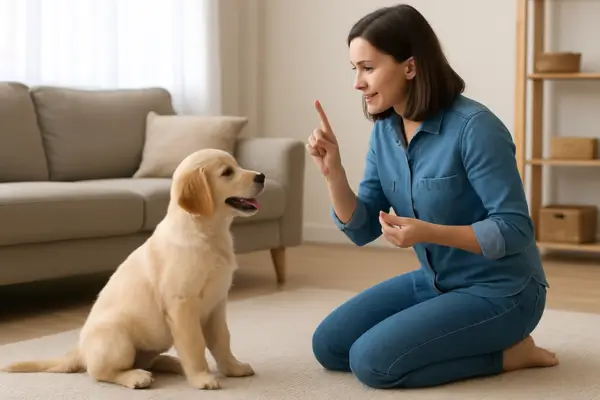
Puppy training tips are essential for anyone welcoming a new furry family member into their home. While raising a puppy is an exciting and rewarding experience, it also involves discipline, time, patience, and intentional actions. When these methods are applied correctly, you build a solid foundation for lifelong obedience, confidence, and companionship.
Training a puppy is not only about teaching tricks; it’s about understanding behavior, communication, and emotional development. Puppies learn differently than humans — they react to tone, timing, patterns, repetition, and rewards. Knowing how dogs interpret information is the first step to successful and stress-free training.
This complete guide offers structured, proven, and compassionate methods based on positive reinforcement, routine building, and clear communication. With daily practice, you’ll transform your puppy into a well-behaved, confident, and loving companion, while preventing future behavior issues such as anxiety, destructive chewing, or fear-based reactions.
1️⃣ Understanding Puppy Psychology (How Puppies Learn)
Dogs learn through repeated actions, consistent language, and emotional responses. Before diving into commands and rules, it’s important to understand how puppies develop mentally and emotionally. Their early weeks and months shape who they will become as adult dogs.
Step-by-Step:
- Observe your puppy’s natural behavior patterns and motivation triggers (treats, praise, play).
- Speak using consistent and short commands; avoid changing words for the same action.
- Reward immediately after desired behavior — timing is crucial.
- Keep each training session short: 5–7 minutes, multiple times a day.
- Always use a calm tone; avoid yelling or showing anger, which causes fear instead of learning.
2️⃣ Establish Strong House Rules Early
Clear rules from day one prevent confusion, frustration, and unwanted habits. Puppies do best in structured environments where expectations never change. Consistency builds confidence and trust — two key components of healthy obedience.
Step-by-Step:
- Define sleeping, potty, play, and eating locations before the puppy arrives.
- Restrict unwanted areas using baby gates rather than scolding.
- Create and follow a healthy daily routine for meals, potty breaks, and rest.
- Reinforce calm behavior instead of reacting to attention-seeking actions.
- Maintain the same rules every day, without exceptions.
3️⃣ Socialization & Confidence-Building
A well-socialized puppy becomes a relaxed, friendly, and adaptable dog. Proper socialization includes exposure to different environments, objects, people, animals, textures, and sounds. Missing this phase increases the risk of fear, aggression, reactivity, and anxiety later.
Step-by-Step:
- Introduce new locations gradually, such as sidewalks, parks, and pet-friendly stores.
- Allow monitored interaction with calm and vaccinated dogs.
- Play environmental sounds like traffic, fireworks, and children’s laughter at low volume.
- Practice touch desensitization on paws, ears, tail, and teeth.
- Praise brave, curious, and calm reactions during new experiences.
4️⃣ Crate Training & Potty Training
Crate training is one of the most effective methods for building independence, emotional comfort, and behavioral control. Paired with proper potty training techniques, it reduces indoor accidents and prevents destructive chewing habits.
Step-by-Step:
- Choose a crate large enough to stand and turn around, but not excessively spacious.
- Add soft bedding, chew-safe toys, and blankets to create safety and comfort.
- Begin with very short sessions and slowly increase the time spent inside.
- Take your puppy outside after waking, eating, playing, and every 90 minutes.
- Reward outdoor potty success immediately using treats and enthusiastic praise.
5️⃣ Teaching Basic Commands Through Positive Reinforcement
Basic obedience commands ensure safety inside and outside the home. Start with simple cues such as sit, come, stay, and leave it. Positive reinforcement encourages learning without fear or punishment, creating respect rather than intimidation.
Step-by-Step:
- Start training in quiet areas to reduce distraction and confusion.
- Pair hand gestures with verbal commands to help your puppy understand faster.
- Use clickers or a marker word like “YES” to reinforce correct responses.
- Avoid repeating commands too many times; wait for compliance instead.
- Progress slowly by adding distractions, increasing distance, and extending duration.
6️⃣ Managing Chewing, Biting & Play Behavior
Chewing and mouthing are normal behaviors in puppies, especially during teething stages. Instead of punishing, teach them what is acceptable. Proper guidance prevents destruction while promoting healthy dental habits and play boundaries.
Step-by-Step:
- Offer safe chew toys, cooling teething rings, or frozen treats.
- Use a calm “no bite” phrase, then immediately redirect with an approved toy.
- Stop interaction if biting continues, teaching bite-inhibition limits.
- Avoid rough games like early tug-of-war that can promote dominance.
- Use bitter spray on furniture if chewing becomes persistent.
7️⃣ Puppy Training Tips for Lifelong Success
Training is not something that ends — it evolves as your puppy matures. Lifelong learning keeps dogs mentally sharp, emotionally stable, and physically stimulated. Consistent engagement prevents boredom-based misbehavior.
Step-by-Step:
- Continue practicing commands even after they are mastered.
- Rotate toys weekly to prevent boredom and destructive habits.
- Use puzzle feeders and enrichment toys for mental exercise.
- Introduce agility or advanced commands once age-appropriate.
- Celebrate growth and remain patient through setbacks.
Conclusion
Training is not only about shaping behavior — it is about nurturing trust, respect, and emotional security. Your puppy is learning what life means through your actions, your tone, your patience, and your love. One day, you will look at your well-behaved, loyal, and confident dog and realize that every small step, every minute of repetition, and every gentle correction helped create a lifelong bond. Stay patient, stay kind, and remember: you are not just training a puppy, you are raising your best friend.