
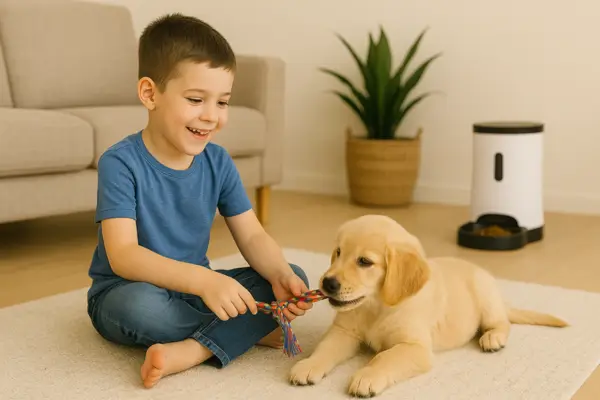
In today’s fast-moving world, many pet owners are turning to automatic feeders to keep their pets well-fed and on schedule—even during long workdays or hectic mornings. These devices are incredibly helpful for maintaining consistency in feeding routines, managing portion control, and offering peace of mind when you can’t be home. But while they solve the problem of when and how much your pet eats, they don’t replace the attention, stimulation, and physical activity that pets also need—especially after meals.
For pets, mealtime isn’t just about nutrition—it’s also a cue for activity and engagement. Without follow-up interaction, pets may become bored, restless, or even develop undesirable habits like overeating, chewing furniture, or excessive sleeping. This is particularly true in indoor environments, where stimulation may be limited.
That’s why building a post-feeding routine is essential, especially when using automatic feeders. By pairing mealtimes with safe and fun indoor activities, you help maintain your pet’s mental alertness, prevent weight gain, and create a more balanced, enriching daily schedule.
In this blog, we’ll explore:
- Why indoor play after meals is beneficial
- The best types of post-feeding activities based on age and energy levels
- How to create a seamless routine using your automatic feeder as a trigger for play
Whether you’re a dog parent, a cat lover, or care for multiple pets, these tips will help transform your feeding routine into a more engaging and healthy experience for your furry family members.
Why Post-Feeding Activity Matters
While feeding your pet with an automatic feeder ensures consistent nutrition, it’s equally important to consider what happens next. Post-meal activities play a crucial role in your pet’s physical health, emotional well-being, and behavior. Here’s a closer look at why incorporating gentle, indoor activity after meals is beneficial:
Supports Digestion and Prevents Weight Gain
After eating, light movement helps kickstart your pet’s digestive system. This is especially important for dogs, who benefit from a short walk or relaxed playtime to promote healthy gastrointestinal function. Movement helps prevent common issues such as bloating, gas, and constipation—especially in sedentary or older pets.
In addition, post-meal activity helps manage your pet’s weight. When pets eat and immediately settle into a long nap or inactive period, calories are more likely to be stored as fat. Just 10–15 minutes of light activity after eating can burn off extra energy, keep metabolism active, and contribute to a healthy body condition over time. For pets on weight-loss plans, this gentle calorie-burning habit can be an essential part of progress.
Note: High-energy activity immediately after meals—like running or jumping—should still be avoided to prevent issues like gastric torsion (bloat), especially in large dog breeds. Gentle play or a slow indoor walk is ideal.
Reduces Boredom and Promotes Mental Stimulation
For many pets, eating is a short-lived event, especially when food is dispensed automatically. Without human interaction or environmental stimulation, pets may experience boredom soon after their meal. Boredom can lead to a range of behavioral problems: chewing furniture, scratching doors, over-grooming, excessive barking, or digging.
By integrating interactive activities after feeding, such as:
- Puzzle toys
- Snuffle mats
- Light training exercises
- Hide-and-seek with treats
you engage your pet’s brain in a healthy way. Mental stimulation is just as important as physical exercise—especially for indoor cats and dogs with limited space to roam.
Builds Structure Around Feeding Time
Pets are creatures of habit, and they thrive when their day follows a predictable rhythm. When you consistently follow feeding with gentle activity, your pet learns to expect a routine: eat, play, relax. This structure helps reduce anxiety, improves behavior, and gives your pet a sense of purpose throughout the day.
Structured routines are particularly beneficial when:
- You’re away at work or running errands during the day
- Your pet tends to have excess energy at specific times
- You’re crate training or working on behavior improvement
By making post-feeding activity part of your pet’s daily routine, you create a lifestyle that promotes both physical health and emotional security.
Post-meal engagement is a small habit that offers big returns. It improves digestion, prevents weight gain, boosts brain activity, and provides the structure your pet needs to feel safe, satisfied, and balanced—all while making the most of your automatic feeder’s benefits.
Considerations Before Indoor Play
While post-feeding play is beneficial, not every activity is appropriate immediately after a meal. The key is to be mindful of your pet’s physical condition, digestive needs, and behavior patterns so you can choose the right type and timing of indoor activity. Below are essential considerations to ensure playtime supports your pet’s health rather than disrupts it.
Wait Time After Eating (Especially for Dogs)
One of the most important factors to keep in mind is how soon to play after your pet eats. Dogs, in particular, can be vulnerable to digestive issues if they’re too active right after a meal.
- Large-breed dogs and those with deep chests (like Boxers, Great Danes, and Dobermans) are at higher risk of bloat, a serious condition where the stomach fills with gas and can twist.
- For these breeds, avoid any running, jumping, or rough play for at least 60 minutes after eating.
- For most other dogs, 30 minutes of rest after a meal is a safe buffer before beginning light activity.
- For cats, digestion concerns are less severe, but intense movement should still be avoided right after meals.
💡 Tip: Use this rest period to encourage quiet bonding time—brushing, gentle petting, or soft music to ease into post-meal calmness.
Pet’s Age, Breed, and Energy Level
Just as humans have different post-meal preferences, so do pets. Understanding your pet’s individual characteristics will help you choose activities that are safe, enjoyable, and aligned with their natural tendencies.
- Age:
- Young pets (puppies and kittens) often get a burst of energy after eating, but their developing bodies need short, controlled play sessions. Too much stimulation can make them overly excited or disrupt digestion.
- Seniors often have slower digestion and limited stamina, so soft, non-strenuous activities like scent work or snuggling with a chew toy are best.
- Young pets (puppies and kittens) often get a burst of energy after eating, but their developing bodies need short, controlled play sessions. Too much stimulation can make them overly excited or disrupt digestion.
- Breed & Size:
- Energetic breeds like Huskies, Terriers, or Border Collies may seem ready to play right after eating, but benefit from mentally engaging games that prevent overexcitement.
- Calm breeds like Bulldogs or Basset Hounds might prefer slower interaction or just lying near you while working on a gentle enrichment toy.
- Energetic breeds like Huskies, Terriers, or Border Collies may seem ready to play right after eating, but benefit from mentally engaging games that prevent overexcitement.
- Health and Temperament:
Pets recovering from illness, those with joint issues, or overweight pets may require adjusted activity levels. Avoid anything that puts pressure on joints or causes shortness of breath after meals.
💡 Tip: Keep a journal or notes on how your pet behaves after eating. Over time, you’ll recognize the right window and style of play that works best for them.
Choose Low-Impact, Mentally Stimulating Activities
When it’s time to play, gentle and brain-based activities are your best friend. These not only avoid the risks of physical overexertion after meals but also satisfy your pet’s natural instincts like foraging, chewing, and problem-solving.
Here are some ideal indoor, low-impact activity options:
For Dogs:
- Snuffle mats: Sprinkle a few treats or kibble and let your dog “hunt” using their nose.
- Soft chew toys: Ideal for calming down and relieving post-meal anxiety.
- Slow-paced obedience training: Practice simple commands (sit, down, paw) using kibble as a reward.
- Lick mats: Smear a thin layer of peanut butter or yogurt for calming focus.
For Cats:
- Food-dispensing balls: Encourage gentle movement while rewarding with a few extra bites.
- Interactive laser or feather wand (after a short rest period): Keep movements slow and controlled.
- Cat tunnels or hide-and-seek boxes: Promote curiosity without intense energy bursts.
- Clicker training: Teach basic tricks or recall using a few treats as reinforcement.
💡 Tip: If your pet eats multiple small meals throughout the day, rotate the types of enrichment toys or games to prevent boredom and overstimulation.
Best Indoor Activities for Pets After Automatic Feeding
Automatic feeders are great at managing portion control and feeding schedules—but what happens after your pet eats is just as important. Without proper engagement, pets may become bored, anxious, or overly sedentary. Post-feeding indoor activities offer the perfect solution to keep them stimulated without risking overexertion during digestion. Below are five safe, enriching activities to try after mealtime.
Puzzle Toys & Food Games
Keep the brain active without overexertion
Puzzle toys are one of the most effective ways to add mental stimulation to your pet’s routine without requiring physical strain. These toys challenge your pet to think, explore, and problem-solve to get a reward—usually kibble or small treats.
🐶 For Dogs:
- Snuffle mats: Mimic grass or fleece for foraging. Scatter kibble and let them sniff it out slowly.
- Treat-dispensing balls (e.g., Bob-A-Lot, Kong Wobbler): Require nudging or rolling to release food.
- Interactive puzzle boards: Include sliders, flaps, and knobs to manipulate.
🐱 For Cats:
- Food mazes or slow feeders: Encourage pawing and stalking instincts.
- Rolling treat balls: Engage cats in low-energy activity without jumping.
- DIY puzzles: Use cardboard tubes or paper bags with treats hidden inside.
💡 Tip: Use a portion of your pet’s actual meal in these toys to avoid overfeeding. Rotate toys every few days to keep interest high.
Light Tug-of-War or Indoor Fetch (Soft Toys)
Burn off light energy safely indoors
Some dogs, especially young or medium-energy breeds, may want to move around after eating—after a 20–30 minute rest period. Instead of intense exercise, try controlled games like tug or hallway fetch using soft toys. These games provide movement, engagement, and bonding without being too intense.
✅ Safety Tips:
- Use plush or rubber toys to avoid damaging furniture or floors.
- Play in carpeted areas to reduce slipping.
- Avoid sharp turns, running, or jumping (especially in breeds prone to joint or digestion issues).
💡 Tip: End the game after 5–10 minutes or sooner if your dog seems tired or overstimulated.
Scent Games & Hide-and-Seek
Use favorite toys or treats (not extra food)
Stimulates natural foraging behavior
Scent work is a low-energy, high-reward activity that engages your pet’s nose and brain. It mimics the foraging or hunting behaviors pets would perform in the wild and is especially satisfying for dogs with strong scent drives and curious indoor cats.
Easy Ideas:
- Hide-a-toy: Hide your pet’s favorite toy in another room and encourage them to “find it.”
- Towel roll-up: Place a toy or treat inside a rolled towel for them to unroll.
- Box game: Hide an object in one of several boxes and let them sniff it out.
💡 Tip: Use toys or training treats sparingly—avoid adding extra food if your pet is weight-sensitive. Always supervise to avoid choking on torn toy parts.
Obedience Training or Trick Practice
Reinforce commands with praise or toys
Builds focus and bonds after meals
Post-meal is a great time for short training sessions because your pet is typically calm and content. Rather than relying on food, you can use praise, attention, or toys as rewards. This builds your pet’s mental discipline and reinforces your relationship.
Ideas by Pet:
- Dogs: Practice sit, stay, down, shake, or place. For advanced learners, teach new tricks like spin or bow.
- Cats: Yes, cats can train too! Use clicker training to teach high-five, come, or jump-through-a-hoop behaviors.
💡 Tip: Keep sessions brief (5–10 minutes). Use a calm voice and end on a positive note to encourage long-term engagement.
Cat Tree Climbing or Tunnel Play
Engaging options for cats to stay mobile indoors
Encourages gentle movement and exploration
Cats often experience a playful or curious mood shortly after eating. Encouraging light movement supports digestion and reduces boredom—especially for indoor cats who don’t have natural environmental stimulation.
Fun Setups:
- Cat trees or shelves: Let cats climb and perch to observe their surroundings.
- Tunnels and cubes: Offer exploration and hiding opportunities.
- Feather wand toys: After rest time, use slow, low swings to engage without causing sprinting.
💡 Tip: Avoid intense chase games immediately after eating—opt for slower, stalking-style play. For older cats, choose lower platforms and padded tunnels for joint safety.
Pairing feeding with the right type of indoor activity transforms mealtime into a full wellness routine. Whether your pet is a puzzle-solving genius, a scent-driven sniffer, or just enjoys a soft tug toy, these indoor activities offer the perfect mix of fun, structure, and health benefits—especially when meals are automatically dispensed. With the right balance of play and rest, your pet will feel mentally fulfilled and physically comfortable throughout the day.
Activities to Avoid Right After Feeding
While gentle activities can be beneficial after meals, not all play is appropriate right away. Certain actions—especially those that are physically intense or involve additional food—can lead to digestive issues, discomfort, or behavioral problems. Here are three key activities to avoid immediately after feeding your pet:
High-Impact Running or Jumping
Why to avoid it:
After eating, your pet’s body shifts into digestion mode. High-impact activity, such as sprinting, jumping on furniture, or racing up and down stairs, can disrupt this process—especially in dogs. It increases the risk of bloat (gastric dilatation-volvulus), a serious and sometimes fatal condition that primarily affects large, deep-chested dog breeds.
Even smaller breeds and cats can experience stomach cramps, regurgitation, or bloating if they’re too active too soon.
✅ Instead, opt for:
- A calm sniffing game
- Gentle puzzle toys
- Quiet bonding time on a soft mat or bed
🕒 Wait at least 30–60 minutes after feeding before allowing more vigorous exercise.
Intense Tugging or Rough Play
Why to avoid it:
Roughhousing, tug-of-war with strong pulling, or wrestling-like play can cause your pet’s body to strain and twist—especially around the abdomen, which may still be full from their recent meal. This not only affects digestion but may also cause vomiting or discomfort, particularly in sensitive or older pets.
It can also lead to overstimulation, especially in dogs, which may cause behavioral issues like hyperactivity or aggression if not managed properly.
✅ Instead, try:
- Light tug play with soft resistance (after rest period)
- Calm training sessions with non-food rewards
- Puzzle toys that focus on mental work, not physical force
Feeding More Treats Right After Meals
Why to avoid it:
Many pet owners fall into the habit of giving treats shortly after meals—whether for training, affection, or to encourage rest. However, this can lead to overfeeding, unbalanced calorie intake, and weight gain over time. Some pets may also start expecting “dessert” after every meal, which reinforces unhealthy eating habits.
Extra treats immediately after a full meal can also cause:
- Digestive upset (especially in sensitive stomachs)
- Increased risk of food guarding or demanding behavior
- Disrupted feeding routines
✅ Instead, use:
- Praise, petting, or toys as post-meal rewards
- Part of your pet’s meal ration as a reward in games or training
- Low-calorie alternatives like a short play session or walk
What you don’t do after feeding can be just as important as what you do. Avoiding high-impact activities, rough play, and extra treats ensures that your pet’s digestion remains smooth, their weight stays healthy, and their behavior stays balanced. With a little timing and the right choices, you can create a safe, effective post-meal routine that supports long-term wellness.
Creating a Healthy Indoor Routine
A consistent routine is one of the most important elements of your pet’s overall well-being. While automatic feeders help regulate mealtime, what comes before and after those meals plays a big role in keeping your pet physically healthy, mentally engaged, and emotionally balanced—especially for pets that spend most of their time indoors.
Building a routine around feeding and interactive play creates structure, reduces anxiety, and supports better behavior. Here’s how to establish a healthy indoor rhythm for your pet:
Pair Feeding Schedules with Interactive Play Blocks
Why it matters:
Pets thrive on predictability. When feeding times are followed by light, consistent enrichment sessions, your pet begins to associate mealtime with engagement, rather than boredom or restlessness. This structure also helps prevent weight gain, hyperactivity, or behavioral issues like destructive chewing or over-grooming.
🕒 Example Daily Routine:
- Morning
- 7:30 AM: Automatic feeding
- 8:00 AM: Snuffle mat or gentle puzzle play
- 7:30 AM: Automatic feeding
- Midday
- Quiet time or nap
- Light training or scent games
- Quiet time or nap
- Evening
- 6:30 PM: Second feeding
- 7:00 PM: Tunnel play for cats or soft tug/fetch for dogs
- 8:00 PM: Calm down with a chew toy or cuddle time
- 6:30 PM: Second feeding
💡 Tip: Make activity blocks short (10–15 minutes) and focused on variety—mental, sensory, and light movement.
Use Smart Toys or Auto-Play Devices
Why it helps:
If you’re busy during the day or away from home, your pet still needs stimulation between meals. Fortunately, smart toys and interactive devices can provide hands-free engagement that works well with automated feeding schedules.
Smart Indoor Options:
- Automatic laser toys for cats: Engage them in light stalking or pouncing while you’re out.
- Timed treat-dispensers: Drop treats or kibble throughout the day to encourage movement.
- Motion-activated toys: Respond when your pet walks by, triggering curiosity and mild activity.
- Smart puzzle feeders: Connected to apps, these allow remote interaction with your pet.
💡 Tip: Introduce auto-play devices gradually, so your pet doesn’t become overstimulated or afraid of unexpected movement or sounds.
Observe Your Pet’s Behavior and Adjust Accordingly
Why it’s essential:
No two pets are exactly alike. Some may love a snuffle mat, while others lose interest quickly. Some need multiple play breaks per day, while others prefer one solid enrichment session. The best routines are flexible and responsive to your pet’s evolving needs.
What to Watch For:
- Energy spikes or dips: Does your pet get zoomies right after eating or prefer a nap?
- Signs of overstimulation: Pacing, panting, or hiding after interactive play may indicate too much too fast.
- Changes in appetite or mood: These could signal the need to adjust your feeding or activity balance.
💡 Tip: Keep a simple daily log for a few days to track how your pet behaves before and after meals. You’ll quickly notice patterns that help you fine-tune your routine.
A healthy indoor routine goes beyond feeding—it’s about creating a rhythm of nourishment, activity, and rest that suits your pet’s lifestyle. By aligning feeding times with intentional, low-impact play and enrichment, and adjusting based on your pet’s responses, you’ll build a routine that promotes physical health, mental sharpness, and emotional calm—all from the comfort of home.
Conclusion
As pet owners, we often focus on what and when our pets eat—but what happens after mealtime is just as important. This blog explored the value of pairing automatic feeding with indoor activities that support your pet’s mental, physical, and emotional well-being.
Indoor Activities Can Boost Post-Meal Health and Happiness
Feeding is more than just nourishment—it’s a key part of your pet’s daily rhythm. When followed by appropriate indoor engagement, even something as simple as a sniffing game or a short puzzle session can provide real benefits:
- Supports digestion: Gentle movement and stimulation help process meals smoothly, reducing discomfort or bloating.
- Prevents boredom: Especially for pets home alone or with limited outdoor access, activities add purpose and prevent destructive habits.
- Improves behavior and mood: Structured routines reduce anxiety and give pets a sense of predictability and satisfaction.
By turning meals into opportunities for gentle enrichment, you help your pet feel both physically satisfied and mentally fulfilled.
Variety and Consistency
Routine gives pets a sense of security—but variety prevents boredom. Striking the right balance means:
- Keeping timing predictable (e.g., morning meal followed by enrichment)
- Rotating games throughout the week: puzzles on Monday, hide-and-seek on Tuesday, soft toy play on Wednesday, etc.
- Adjusting based on needs: Senior pets may need shorter, softer activities, while younger pets may crave more challenge and change.
Consistency teaches your pet what to expect. Variety keeps them excited to participate.
Examples of Weekly Rotation:
| Day | Activity |
| Monday | Snuffle mat with kibble |
| Tuesday | Scent trail using favorite toy |
| Wednesday | Trick training or basic commands |
| Thursday | Tunnel exploration (for cats) or soft fetch |
| Friday | DIY cardboard box puzzle |
| Saturday | Laser pointer (cats) or low tug game (dogs) |
| Sunday | Rest day with extra cuddle time |
Start with One Simple Game and Build a Post-Feeding Play Habit
If this is your first time creating a post-meal routine, don’t feel overwhelmed. You don’t need to do everything at once. Start with one small, manageable step:
- Try a 5-minute puzzle toy after dinner tonight
- Add a quick hide-and-seek with your pet’s favorite toy tomorrow
- Or simply sit with your pet and offer a gentle chew toy to wind down
Over time, these small steps will turn into a healthy habit. You’ll start to notice changes in your pet’s mood, energy, and overall routine. They’ll look forward to their post-meal enrichment just as much as they look forward to the food itself.Combining automatic feeding with intentional indoor play helps you create a complete, balanced daily routine. It doesn’t take much—just a little time, attention, and creativity—to make a big impact on your pet’s health and happiness. Start with one simple activity today, and build a routine that both you and your pet will enjoy every day.