
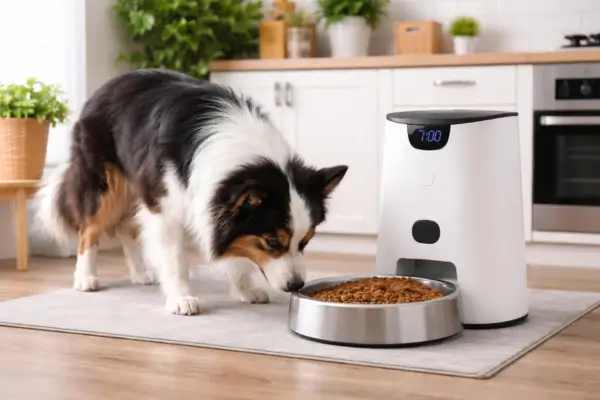
Many dog owners wonder how often you should feed dog automatically, especially when using an automatic feeder to maintain a consistent routine. Feeding frequency is not just about convenience — it directly impacts digestion, energy levels, metabolism, and long-term health.
Busy schedules, travel, and irregular work hours can make manual feeding inconsistent. That’s where automatic feeders become extremely helpful. They allow precise portion control and scheduled meals, but it’s still important to understand how often dogs should eat based on age, activity level, and overall health.
In this guide, you’ll learn the recommended feeding frequency for puppies, adult dogs, and senior dogs — plus how automatic feeders can support a healthier routine.
Why Feeding Schedule Matters for Dogs
Dogs thrive on consistency. A regular feeding schedule helps:
✔ Improve digestion
✔ Prevent overeating
✔ Reduce anxiety around food
✔ Maintain stable energy levels
✔ Support healthy weight management
A consistent feeding routine can improve digestion, especially when combined with supplements like the best probiotics for dogs.
Irregular feeding can lead to digestive discomfort, behavioral changes, and weight fluctuations.
Recommended Feeding Frequency by Age
Puppies (Up to 6 Months)
According to the American Kennel Club, feeding schedules should be adjusted based on age, size, and activity level.
👉 3–4 meals per day
Puppies have fast metabolisms and need frequent meals to support growth and development.
Adult Dogs
👉 2 meals per day
Most adult dogs do best with one meal in the morning and one in the evening. This schedule supports digestion and prevents excessive hunger.
Senior Dogs
👉 2 smaller meals daily
Older dogs may benefit from smaller, evenly spaced meals to improve digestion and maintain steady energy levels.
Can Automatic Feeders Replace Manual Feeding?
Yes — but with balance.
If you’re considering upgrading your setup, check our guide to the best automatic pet feeders to find reliable options for maintaining a consistent feeding schedule.
Automatic feeders:
✔ Maintain consistent schedules
✔ Provide precise portion control
✔ Prevent missed meals
✔ Help manage weight
However, pet owners should still:
- Monitor their dog’s weight
- Ensure constant access to fresh water
- Maintain occasional feeding interaction
Automation should support care — not replace attention.
Portion Control Is More Important Than Frequency
Many feeding problems come from incorrect portion size rather than how often meals are given.
Portion needs vary based on:
- Breed size
- Activity level
- Age
- Health conditions
Automatic feeders help deliver consistent portions, which reduces the risk of overfeeding.
Best Times to Feed Dogs Automatically
Veterinarians commonly recommend:
👉 Morning (6–8 AM)
👉 Evening (5–7 PM)
This aligns with natural digestion cycles and daily activity patterns.
Programmable feeders make it easy to maintain these ideal time windows.
Signs Your Dog’s Feeding Schedule Needs Adjustment
Watch for:
- Sudden weight gain or loss
- Low energy levels
- Digestive issues
- Excessive hunger or begging
If you notice these signs, consult your veterinarian to adjust feeding frequency or portion size.
Benefits of Automatic Feeding for Busy Owners
Automatic feeders are ideal for:
✔ Professionals with long work hours
✔ Frequent travelers
✔ Multi-pet households
✔ Owners managing weight control
They provide structure and consistency while simplifying daily routines.
| Product | Key Benefits | Pros | Cons |
|---|
| Automatic Pet Feeder with Portion Control | Accurate portions & consistent meals | Precise schedule, prevents overeating | Needs refilling, higher cost |
| Smart Wi-Fi Pet Feeder | Remote feeding & alerts | App control, custom plans | Needs WiFi, learning curve |
| Timed Programmable Feeder | Simple scheduled meals | Easy setup, inexpensive | No app control |
| Large Capacity Pet Feeder | Holds more food | Fewer refills, multi-pet | Takes more space |
| Slow Feeding Dish | Slower eating & digestion help | Encourages slower pace | Not automatic |
Understanding how often you should feed your dog automatically helps you create a balanced feeding routine that supports long-term health. Most adult dogs thrive on two meals per day, while puppies require more frequent feeding.
Automatic feeders make consistency easier — especially for busy pet owners — but proper portion control and regular monitoring remain essential.
Recommended Automatic Feeding Tools to Support Your Dog’s Routine
🥇 VOLUAS Automatic Cat/Dog Feeders
Key Benefits
- Helps maintain consistent feeding frequency
- Accurate portion measurements
- Ideal for busy owners
Pros
✔ Precise scheduling
✔ Prevents overeating
✔ Reduces anxiety around meals
Cons
✖ Needs periodic refilling
✖ Higher cost than gravity models
🥈PETLIBRO Automatic Cat Feeder
Key Benefits
- Remote feeding via app
- Set feeding times from anywhere
- Receive feeding alerts
Pros
✔ App control (very convenient)
✔ Custom feeding schedules
✔ Works well for travel
Cons
✖ Depends on WiFi connection
✖ Slight learning curve
🥉 PETLIBRO Automatic Feeder – 3L Programmable
Key Benefits
- Simple digital timer setup
- Keeps feeding on routine
- Budget-friendly option
Pros
✔ Easy to program scheduled meals
✔ Good basic option
✔ Reliable feeding patterns
Cons
✖ No smartphone control
✖ Limited features vs smart feeders
🏆 oneisall Automatic Cat Feeder for 2 Cats, 20 Cups/5L
Key Benefits
- Holds more food
- Fewer refills required
- Perfect for multi-pet homes
Pros
✔ Great for busy schedules
✔ Reduces refill frequency
✔ Stable feed delivery
Cons
✖ Takes up more space
✖ Volume may be unnecessary for single small pets
FAQ
Can dogs eat once a day with an automatic feeder?
Some dogs can tolerate one meal daily, but most benefit from two evenly spaced meals.
Are automatic feeders good for weight control?
Yes. Portion control and consistent scheduling help prevent overeating.
Should puppies use automatic feeders?
They can, but supervision and proper portion settings are important.Type / to choose a block