
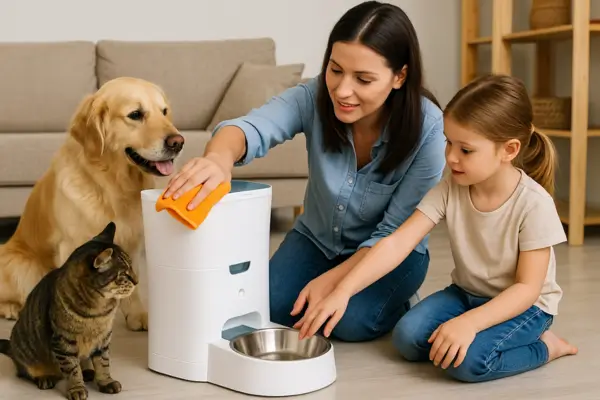
Brief Overview of Smart Pet Feeders and Their Rising Popularity
In today’s fast-paced world, technology has touched every corner of our lives—including how we care for our pets. Smart pet feeders have emerged as a game-changer for pet owners who want to ensure their furry friends are fed on time, even when life gets hectic. These innovative devices go far beyond basic food dispensers. Many models feature app control, scheduled feeding, voice commands, camera monitoring, and portion control—all designed to provide both convenience and peace of mind.
As more pet parents embrace smart technology, smart feeders are quickly becoming a staple in modern households. Whether you’re at work, running errands, or traveling, these feeders offer an effortless way to stick to your pet’s routine without compromising their health or happiness.
Introduce the Central Question: Can These Devices Actually Clean Themselves?
But as impressive as these features are, a growing number of pet owners are starting to wonder: Can smart pet feeders clean themselves too? After all, automation is great—but nobody wants to deal with messy bowls, sticky food residue, or hidden crumbs that could attract pests or cause mold.
It’s a logical next step in the evolution of pet tech: if a device can feed your pet with precision, monitor their eating habits, and alert you when it’s running low on food—shouldn’t it be able to keep itself clean as well?
Promise to Explore Facts vs. Misconceptions
This blog post sets out to answer that question clearly and honestly. We’ll explore what “self-cleaning” really means in the world of pet feeders, highlight what current technology can and can’t do, and debunk some of the common misconceptions surrounding these devices.
Whether you’re considering buying a smart feeder or already have one in your home, this article will give you a realistic look at how much cleaning effort is still required—and share practical tips to make maintenance easier and safer for your pet.
Let’s dive in and uncover the truth about smart feeder hygiene.
Understanding Smart Pet Feeders
What Are Smart Pet Feeders?
Smart pet feeders are advanced food dispensing systems designed to automate and enhance the feeding process for pets. Unlike traditional bowls or gravity feeders, these devices use technology to provide more control, precision, and convenience. Whether you’re away at work or out of town for the weekend, smart feeders make it easy to ensure your pet stays well-fed and on schedule—without relying on a pet sitter or a neighbor.
These devices are typically powered by electricity or batteries and are equipped with digital or app-based controls that allow owners to manage feeding routines remotely.
Key Features: Scheduling, Portion Control, App Connectivity
What makes these feeders “smart” is the range of features they offer:
- Scheduling: Set specific feeding times throughout the day to create a reliable routine for your pet, which is especially helpful for pets with strict dietary needs or medical conditions.
- Portion Control: Control the exact amount of food dispensed at each meal to avoid overfeeding or underfeeding—an important feature for managing weight and health.
- App Connectivity: Many models connect to smartphone apps, allowing pet owners to adjust feeding times, monitor food levels, and even receive alerts—all from their mobile device.
- Voice Recording & Cameras: Some feeders let you record messages or watch your pet in real time via built-in cameras, adding a personal touch when you’re away.
Cleaning Features: What Most Models Do and Don’t Include
While smart pet feeders excel at automation, most fall short when it comes to cleaning capabilities. Here’s what you can generally expect:
What They Do Include:
- Removable Bowls and Food Trays: Many models feature dishwasher-safe or easy-to-clean parts that simplify manual cleaning.
- Smooth, Wipeable Surfaces: The design often prioritizes materials that are less likely to trap food residue or bacteria.
- Low-Food and Clog Alerts: Some feeders notify you when food is stuck or running low, indirectly encouraging users to inspect and clean the unit.
What They Don’t Include:
- Automatic Self-Cleaning Systems: Unlike self-cleaning litter boxes or robotic vacuums, smart feeders do not have built-in systems to wash or sanitize themselves.
- Internal Cleaning Functions: You won’t find any feeders that flush out food chutes or sanitize feeding bowls automatically.
- Cleaning Alerts or Reminders: Most smart feeders don’t notify users when it’s time to clean the device—this task is still entirely user-managed.
The Myth: Self-Cleaning Capabilities
Common Assumptions Pet Owners Make
When pet owners hear the term “smart feeder,” it’s easy to assume that the technology goes beyond just feeding—some even expect full automation, including cleaning. Many imagine a device that not only dispenses food but also wipes itself down, flushes out old residue, and stays spotless with little to no effort. This belief often comes from the growing trend of self-cleaning gadgets, like robotic vacuums and litter boxes, leading people to expect similar convenience from pet feeders.
Marketing Language That May Cause Confusion
Part of the misunderstanding comes from the way some smart pet feeders are marketed. Terms like “low-maintenance,” “easy-clean design,” “hygienic build,” or “mess-free feeding” can unintentionally (or sometimes intentionally) imply that the device takes care of cleanliness on its own. While these phrases may refer to smooth materials or removable parts, they can be misleading—especially to first-time buyers unfamiliar with how the devices actually function.
Additionally, some brands highlight “clean dispensing systems” or “anti-jam technology,” which sound like cleaning features but actually refer to food flow efficiency—not hygiene or sanitation.
Clarify What “Self-Cleaning” Might Imply
In reality, no smart pet feeder on the market today truly cleans itself. What may be labeled as “self-cleaning” often just means:
- The food path is less likely to clog or get stuck with residue.
- Some parts can be removed and rinsed easily.
- The feeder’s design helps minimize mess—but does not eliminate it.
This is a far cry from the full automation people often imagine. There are no internal rinsing mechanisms, no disinfecting cycles, and no debris-trapping vacuums. At most, “self-cleaning” refers to ease of manual cleaning, not the feeder taking care of it entirely on its own.
Understanding this distinction is key to setting the right expectations and ensuring pets continue to eat from a clean, safe device.
The Fact: What Smart Feeders Actually Do
Reality Check: Do They Really Clean Themselves?
Let’s set the record straight—smart pet feeders do not clean themselves. While they offer impressive automation for feeding schedules and portion control, the cleaning process still requires manual effort. No current model on the market includes built-in sanitization features like rinsing systems, automatic scrubbing, or self-drying mechanisms.
The term “smart” refers to digital and remote functions—not hygiene. So while these devices may reduce the mess caused by pets or food spillage, they don’t take care of cleaning in the way a truly self-cleaning gadget would.
Explain What Parts, If Any, Have Automated Cleaning Features
Although true self-cleaning doesn’t exist in smart feeders, some design elements do help minimize how dirty the feeder gets and simplify the cleaning process:
- Detachable Parts: Many feeders come with removable bowls, food trays, and hoppers that can be easily taken out and cleaned—some are even dishwasher-safe.
- Anti-Stick Bowls: Certain models use materials like stainless steel or coated plastic that resist food sticking, reducing leftover buildup and making cleanup easier.
- Smooth Surfaces: The feeder’s inner walls are often designed with sleek, curved surfaces that prevent crumbs from collecting in hard-to-reach areas.
- Sealed Food Compartments: Airtight lids and chutes help prevent moisture and pests from getting in, indirectly reducing the likelihood of mold and residue buildup.
These features support cleanliness—but they don’t eliminate the need for regular cleaning.
Maintenance Tasks Still Required by Owners
No matter how advanced your feeder is, you’ll still need to clean it regularly to protect your pet’s health and ensure the feeder functions correctly. Key maintenance tasks include:
- Daily or Weekly Wiping: Remove leftover crumbs or grease from the bowl and surrounding surfaces.
- Washing Removable Parts: Detach and hand-wash or dishwash food trays and bowls depending on the model’s instructions.
- Inspecting for Blockages: Check the food chute or dispenser for clogs, especially if you’re using larger kibble.
- Cleaning Sensors or Screens: Wipe any touchscreen panels, cameras, or sensors with a soft, dry cloth to prevent malfunction.
- Keeping the Area Clean: Clean the floor around the feeder regularly to avoid attracting pests or bacteria.
Potential Innovations on the Horizon
Are Brands Working Toward Truly Self-Cleaning Models?
While today’s smart pet feeders stop short of offering true self-cleaning capabilities, there’s growing interest—and consumer demand—for models that go beyond convenience and actively support hygiene. As more pet owners prioritize health and ease of use, some brands are starting to explore what automated cleaning could look like. Though no feeder on the market currently includes a full self-cleaning system, the groundwork is being laid through small but important innovations.
Manufacturers in the pet tech space are increasingly investing in smarter design, integrating modular parts, smoother internal mechanics, and systems that are easier to clean manually—all steps in the direction of automation.
Smart Hygiene Alerts and Sensors (Examples from Current Models)
Some of the most advanced feeders already incorporate technology that nudges pet owners toward better hygiene practices. For example:
- Low-Food or Jam Alerts: While not directly related to cleaning, these features prompt users to open and inspect the feeder, often leading to spot cleaning or full maintenance.
- Sensor-Driven Feeding Accuracy: Some feeders track food flow to ensure it’s dispensing correctly. If anything is blocking the system, the device may send a notification—this indirectly encourages cleaning.
- App Reminders: A few brands allow users to set custom notifications for cleaning schedules through their mobile app.
- Stale Food Detection (Emerging Tech): Although rare, research is being done on using sensors to detect moisture, mold risk, or food spoilage—which could lead to future alerts for cleaning or refilling.
These features mark early steps in the shift toward smarter hygiene support, even if full automation hasn’t arrived yet.
Future Possibilities and Tech Trends
Looking ahead, several exciting innovations could transform how we clean smart pet feeders:
- Built-In UV Sanitization: UV-C light is already used in water bottles and toothbrush cleaners to kill bacteria. Applying this technology to food bowls or feeder interiors could offer passive sanitizing between meals.
- Self-Rinsing Chambers: Inspired by self-cleaning blenders or espresso machines, future feeders might include small water reservoirs and drainage systems for occasional rinsing of food trays.
- Advanced Sensors for Cleanliness Monitoring: Integrated sensors could one day detect residue buildup, bacterial growth, or even unpleasant odors, triggering alerts or automatic mini-cleaning cycles.
- Voice-Controlled Maintenance Alerts: With the rise of smart home assistants like Alexa and Google Home, cleaning reminders could be integrated into users’ daily routines with voice updates.
As smart pet care continues to evolve, it’s likely that hygiene-focused features will become a major selling point. For now, manual cleaning is still essential—but the future of fully self-cleaning feeders may not be too far off.
How to Maintain a Smart Pet Feeder
Best Practices for Cleaning (Manual Steps)
Even though smart pet feeders can handle the timing and portioning of your pet’s meals, cleaning still requires a hands-on approach. Here are the best manual steps to keep your feeder hygienic and running smoothly:
- Unplug the Feeder: Always start by disconnecting the power or removing batteries to avoid electrical damage.
- Disassemble Removable Parts: Take out the food bowl, tray, hopper, and any other detachable components.
- Soak and Wash: Wash the removable parts using warm water and mild soap. For tougher residue, soak parts for 10–15 minutes before scrubbing.
- Wipe Down the Main Unit: Use a damp cloth to wipe the exterior and any internal surfaces that cannot be submerged. Avoid letting moisture reach electronic components.
- Clean Food Chutes and Dispensers: Use a small brush or soft cloth to remove crumbs or stuck kibble from internal areas.
- Dry Completely: Ensure all parts are fully dry before reassembling to prevent mold or electrical issues.
Frequency Recommendations
Maintaining a consistent cleaning schedule will help keep your pet healthy and extend the life of your device. Here’s a simple guide:
Daily:
- Wipe the food bowl and clean any spills around the feeder area.
- Remove leftover or stale food.
Weekly:
- Wash all removable parts (bowl, tray, hopper).
- Wipe down the feeder body and inspect for food buildup.
Monthly:
- Deep clean internal chutes and hard-to-reach crevices.
- Inspect the feeder for any signs of wear, cracks, or buildup.
- Clean sensors or screens gently with a microfiber cloth.
After Every Food Change:
- Whenever switching brands or types of food, it’s a good idea to clean the feeder to prevent contamination or odor mixing.
Safe Cleaning Products to Use
To keep your smart pet feeder clean and safe for your pet, always use non-toxic and pet-friendly cleaning products. Here are a few safe options:
- Mild Dish Soap: Great for everyday cleaning; rinse thoroughly to remove any residue.
- White Vinegar & Water Solution: A natural disinfectant—mix one part vinegar to two parts water. Safe and effective for wiping down surfaces.
- Baking Soda Paste: For stuck-on grime, baking soda with a little water forms a gentle abrasive cleaner.
- Pet-Safe Disinfectant Wipes: Make sure they’re specifically labeled as safe for pets and free of harsh chemicals like bleach or ammonia.
Avoid:
- Bleach or strong chemical cleaners
- Scouring pads that may scratch surfaces
- Submerging the main electrical unit
With proper maintenance and safe cleaning practices, your smart feeder will remain a dependable tool in your pet care routine—clean, efficient, and worry-free.
Conclusion
Myth or Fact? Mostly a Myth for Now
Let’s answer the big question once and for all: Do smart pet feeders clean themselves?
Despite the technological advances in automated feeding, the idea of a self-cleaning feeder remains mostly a myth. While some models boast features that support easier maintenance—like detachable bowls, smooth interiors, and clog alerts—none of them offer true self-cleaning functionality.
That means no automatic rinsing, no built-in sanitizing systems, and no feeder that completely handles hygiene on your behalf. So if you’ve been hoping for a hands-off cleaning solution, the technology simply isn’t there—yet.
Importance of Proper Maintenance
Even without self-cleaning capabilities, smart feeders are still an excellent investment for busy pet parents. They help you maintain a reliable feeding routine, manage portions, and even stay connected to your pet while away. But to truly benefit from this convenience, consistent maintenance is key.
- Dirty feeders can lead to:
- Mold and bacteria growth
- Unpleasant odors or spoiled food
- Mechanical blockages or sensor malfunctions
- Health risks for your pet
By establishing a regular cleaning routine—wiping down parts daily, washing components weekly, and inspecting for buildup—you can ensure your feeder performs at its best while protecting your pet’s well-being. Think of it as part of your pet’s overall care routine, just like fresh water, vet checkups, or grooming.
Encourage Readers to Research and Read Product Specs Before Buying
Before purchasing a smart pet feeder, it’s essential to be an informed buyer. Don’t let sleek marketing terms like “hygienic design” or “mess-free feeding” mislead you into thinking a feeder will clean itself. Take time to:
- Read the product specifications carefully
- Check for reviews that mention ease of cleaning
- Look for features like dishwasher-safe bowls or detachable food compartments
- Review the user manual, if available, to understand cleaning steps before you buy
Understanding exactly what your feeder can and cannot do will help set the right expectations—and prevent disappointment down the line.
Smart pet feeders are a huge step forward in pet care technology. While they don’t clean themselves (yet), they can still make your life easier—as long as you’re willing to do your part in keeping them clean. Prioritize hygiene, do your homework, and you’ll find a smart feeder that supports both convenience and your pet’s health.