
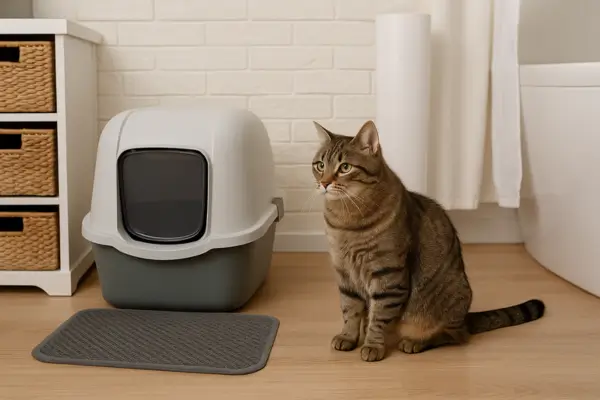
Learning how to reduce cat litter smell at home is essential, especially in small apartments or shared spaces. Even with the best cat litter, bad odors can sneak up quickly if you don’t have a solid routine.
The good news is that you don’t need harsh chemicals or complicated systems to keep odors under control. With the right litter box setup, cleaning habits, and airflow, your home can smell fresh—even with multiple cats.
In this guide, we’ll break down practical, step-by-step strategies to control litter box odor, along with product ideas like mats, covered boxes, and deodorizers you can easily find through Amazon affiliate links.
See litter mats and deodorizers on Amazon1. Start with the Right Litter and Box
Quick overview
Good odor control begins with a quality litter and an appropriate box size.
Step-by-step: set the foundation
- Choose clumping litter – It makes it easier to remove urine and waste completely.
- Consider odor-control formulas – Unscented but odor-locking formulas are best for sensitive cats.
- Pick the right box size – Your cat should turn around comfortably; too small increases mess.
If you need help choosing a litter box that fits small homes, here’s a full guide to the best litter boxes for small apartments.
- Use a covered or high-sided box if your cat tolerates it; this helps contain smells and litter.
- Add a litter mat – Keeps the area around the box cleaner, which also reduces odor.
2. Build a Daily and Weekly Cleaning Routine
Quick overview
Consistent cleaning is the most powerful tool against litter box smells.
Step-by-step: daily and weekly care
- Scoop at least once a day – Twice a day is ideal in smaller homes.
- Top up with fresh litter – Keep a consistent depth of 5–7 cm.
- Empty and wash weekly – Clean the entire box with mild soap and warm water.
According to the American Kennel Club, regular cleaning and proper litter box maintenance are key to preventing odor buildup and keeping cats comfortable.
- Avoid strong bleach or fragrances – They can bother your cat and cause box avoidance.
- Replace the box every 6–12 months if it becomes scratched or stained.
3. Improve Airflow Around the Litter Box
Quick overview
Odors linger in corners, closets, and closed rooms.
Step-by-step: let the air move
- Avoid tiny, closed closets for the litter box.
- Open windows daily near the box if possible.
- Use a small fan or air purifier in the room to circulate air.
- Keep the lid slightly open on covered boxes if odor builds up.
- Never place the box near food or water bowls, for hygiene and comfort.
4. Use Safe Litter Deodorizers and Accessories
Quick overview
Some products can support your cleaning routine without replacing it.
Step-by-step: add extra help
- Sprinkle baking soda under the litter – A thin layer helps absorb smells.
- Use cat-safe deodorizers recommended by vets or reputable brands.
- Try charcoal filters for covered boxes; many Amazon models include them.
- Replace filters regularly according to package instructions.
- Avoid strong perfumes that may drive your cat away from the box.
Conclusion
Understanding how to reduce cat litter smell at home gives you back control over your space. With the right litter, a simple cleaning routine, and smart accessories, you can enjoy the company of your cat without worrying about embarrassing odors. Every scoop, every wash, and every small adjustment is part of building a fresher, more peaceful home—for you and for the furry friend who shares it.
And choosing the right litter box is the first step—here’s a complete guide to the best litter boxes for small apartments to help you start right.
View the most effective odor-control products on Amazon