
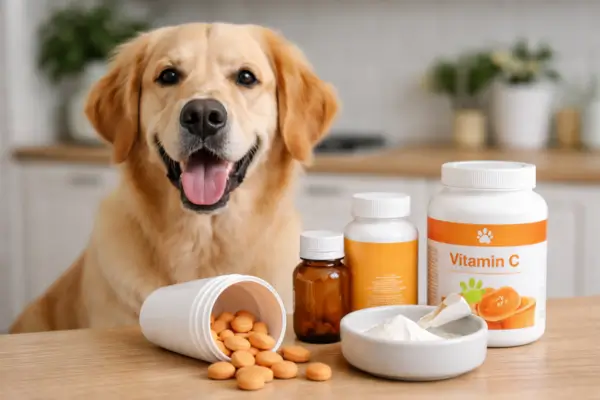
Vitamin C for dogs plays an important role in supporting immune health, reducing inflammation, and protecting cells from oxidative stress. While dogs naturally produce vitamin C in their bodies, certain situations may increase their need for additional support.
Stress, illness, aging, intense physical activity, and environmental factors can reduce a dog’s natural vitamin C levels. In these cases, supplementation may help strengthen the immune system and improve overall health.
In this guide, you’ll learn the benefits of vitamin C for dogs, safe dosage guidelines, when supplementation is helpful, and how to choose the right form for your pet.
⭐ 1. What Is Vitamin C and Why Is It Important for Dogs?
Vitamin C (ascorbic acid) is a powerful antioxidant that helps protect cells from damage and supports immune function.
Although dogs synthesize vitamin C naturally, extra support may be beneficial in certain situations.
Step-by-step: why vitamin C matters
- Supports immune response
- Helps reduce inflammation
- Protects against oxidative stress
- Supports joint and tissue health
- Aids recovery from illness or stress
⭐ 2. Benefits of Vitamin C for Dogs
Vitamin C supports several key systems in a dog’s body beyond immunity.
Vitamin C is just one of several nutrients that support canine health. For a broader overview of supplements that help immunity, joints, and overall wellness, see our complete guide on best dog vitamins and supplements.
Step-by-step: key benefits
- Stronger immune defense
- Reduced joint inflammation
- Improved collagen production
- Support during illness or stress
- Better recovery after physical activity
⭐ 3. When Do Dogs Need Vitamin C Supplements?
Not every dog needs supplementation, but certain conditions may increase the demand.
Step-by-step: dogs that may benefit
- Senior dogs
- Dogs with joint problems
- Dogs under stress or anxiety
- Dogs recovering from illness
- Highly active or working dogs
⭐ 4. Vitamin C Dosage for Dogs
Correct dosage is essential to avoid digestive upset.
According to the American Kennel Club, dogs naturally produce vitamin C, but supplementation may be beneficial during periods of stress, illness, or aging when the body’s demand increases.
Step-by-step: safe dosage guidelines
- Small dogs: 100–250 mg per day
- Medium dogs: 250–500 mg per day
- Large dogs: 500–1,000 mg per day
- Start with a low dose
- Split doses with meals
⚠️ Always consult your veterinarian before starting supplementation.
⭐ 5. Best Forms of Vitamin C for Dogs
Vitamin C supplements come in several forms, each with advantages.
Step-by-step: choosing the right form
- Chewable tablets – Easy to administer
- Powdered vitamin C – Mixes with food
- Buffered vitamin C – Gentler on the stomach
- Multivitamins with vitamin C – Broader support
- Liquid drops – Precise dosing**
6. 🐶 Top Amazon Picks: Best Vitamin C Supplements for Dogs
1. Pet Naturals Immune Support Chews for Dogs
Why it stands out:
A popular immune-support chew formulated specifically for dogs, combining vitamin C with antioxidants.
✅ Benefits
- Supports immune system function
- Contains vitamin C and antioxidants
- Easy-to-give chewable form
- Suitable for daily use
✔️ Pros
- Dog-friendly taste
- Trusted brand
- Good for long-term immune support
❌ Cons
- Lower vitamin C dose per chew
- Not ideal for dogs with food sensitivities
2. VetriScience Vetri Lysine Plus for Dogs
Why it stands out:
A vet-formulated supplement that supports immune health using vitamin C and lysine.
✅ Benefits
- Supports immune response
- Helps during stress or illness
- Veterinarian-formulated
- Easy chew format
✔️ Pros
- High-quality formulation
- Suitable for senior dogs
- Strong immune focus
❌ Cons
- Pricier than basic supplements
- Flavor may not appeal to all dogs
3. Zesty Paws Immune Support Bites
Why it stands out:
A best-selling immune supplement that combines vitamin C with probiotics and antioxidants.
✅ Benefits
- Supports immunity and gut health
- Contains vitamin C
- Tasty soft chews
- Suitable for daily use
✔️ Pros
- Very popular brand
- Multi-benefit formula
- Easy administration
❌ Cons
- Lower standalone vitamin C content
- Higher price point
4. Animal Essentials Vitamin C Powder for Pets
Why it stands out:
A pet-specific vitamin C powder designed for dogs and cats.
✅ Benefits
- Pet-formulated vitamin C
- Supports immune and joint health
- No artificial additives
- Easy to mix with food
✔️ Pros
- Clean ingredient list
- Suitable for sensitive dogs
- Flexible dosing
❌ Cons
- Requires measuring
- Mild taste may need mixing
❤️ Conclusion: Is Vitamin C Good for Dogs?
Vitamin C for dogs can be a valuable addition to a dog’s wellness routine when used correctly. It supports immune health, reduces inflammation, and helps protect the body during periods of stress or aging.
While not every dog needs supplementation, understanding when and how to use vitamin C safely allows pet owners to make informed decisions. Always pair supplements with a balanced diet and veterinary guidance to ensure the best results for your dog’s long-term health.